


 عربى
عربىWall Sockets Manufacturer Craft Upgrades Drive Longer Product Lifespan
Durability in wall sockets has always been a selling point on paper. In practice, it has been harder to guarantee — especially as product price pressure encourages material substitutions that only show their consequences years into a socket's service life. A growing number of wall sockets manufacturers are pushing back against that tendency by upgrading the materials and construction methods that most directly affect longevity.
Brass contact terminals — thicker-gauge and phosphor-bronze alloyed — are replacing thinner alternatives in higher-grade product lines. The difference matters because thin contacts deform slightly each time a plug is inserted and removed. Over thousands of cycles, that deformation adds up, and contact resistance creeps up with it. On the housing side, polycarbonate and glass-fiber-reinforced nylon are gaining ground over standard ABS, particularly in commercial applications where UV exposure and frequent cleaning chemicals accelerate surface degradation.
- Phosphor-bronze terminal contacts maintain spring tension across extended use cycles, reducing contact resistance buildup over time
- Glass-fiber-reinforced nylon housings offer improved dimensional stability and resist the surface crazing that ABS develops under UV exposure
- Silver-alloy contact plating reduces oxidation at connection points — particularly relevant in humid or coastal environments
- Stainless steel internal fixings replace zinc alloy screws in premium socket assemblies, addressing a common long-term corrosion failure point
- Accelerated cycle testing — running sockets through 10,000+ insertion cycles as a standard quality gate rather than a certification-only event
Wall Sockets Manufacturers Rethink Child Safety Protection Structures
Child safety shutters have been a standard socket feature for years in many markets — the UK and EU have required them by regulation for some time. But having shutters and having shutters that work reliably are not the same thing. A mechanism that jams, wears out prematurely, or can be defeated with moderate force defeats the purpose entirely. Wall sockets manufacturers have been going back to the engineering basics on this, and the results are worth noting.
Dual-blocking mechanisms — where both shutters must be depressed simultaneously by a correctly oriented plug before either will open — have become far more common, even outside markets where they are strictly required. Some manufacturers have moved to spring-steel shutter materials rather than polymer springs, improving cycle life and reducing the risk of the spring losing tension over years of use. The mechanical design has simply become more deliberate.
| Shutter Design Type | Mechanism | Defeat Resistance | Typical Application |
| Single Shutter (basic) | One-piece barrier, single spring | Low — can be opened with a single object | Low-cost residential, older designs |
| Dual Blocking Shutter | Two independent barriers, simultaneous pressure required | Medium-High — requires correctly oriented plug | Standard residential, EU / UK regulated markets |
| Spring-Steel Dual Shutter | Steel-spring dual mechanism, reinforced pivot points | High — durable across 20,000+ cycles | Commercial, healthcare, schools |
| Magnetic Alignment Shutter | Magnetic locking, releases under plug polarity match only | Very High — not defeated by physical pressure alone | Premium residential, childcare facilities |
There is also a testing dimension here worth mentioning. Several manufacturers now subject shutter systems to dedicated child simulation testing — using probe geometries and force profiles modeled on children's finger sizes and likely insertion behaviors — rather than relying solely on standard plug insertion tests. It is a more demanding standard, and it produces more carefully engineered results.
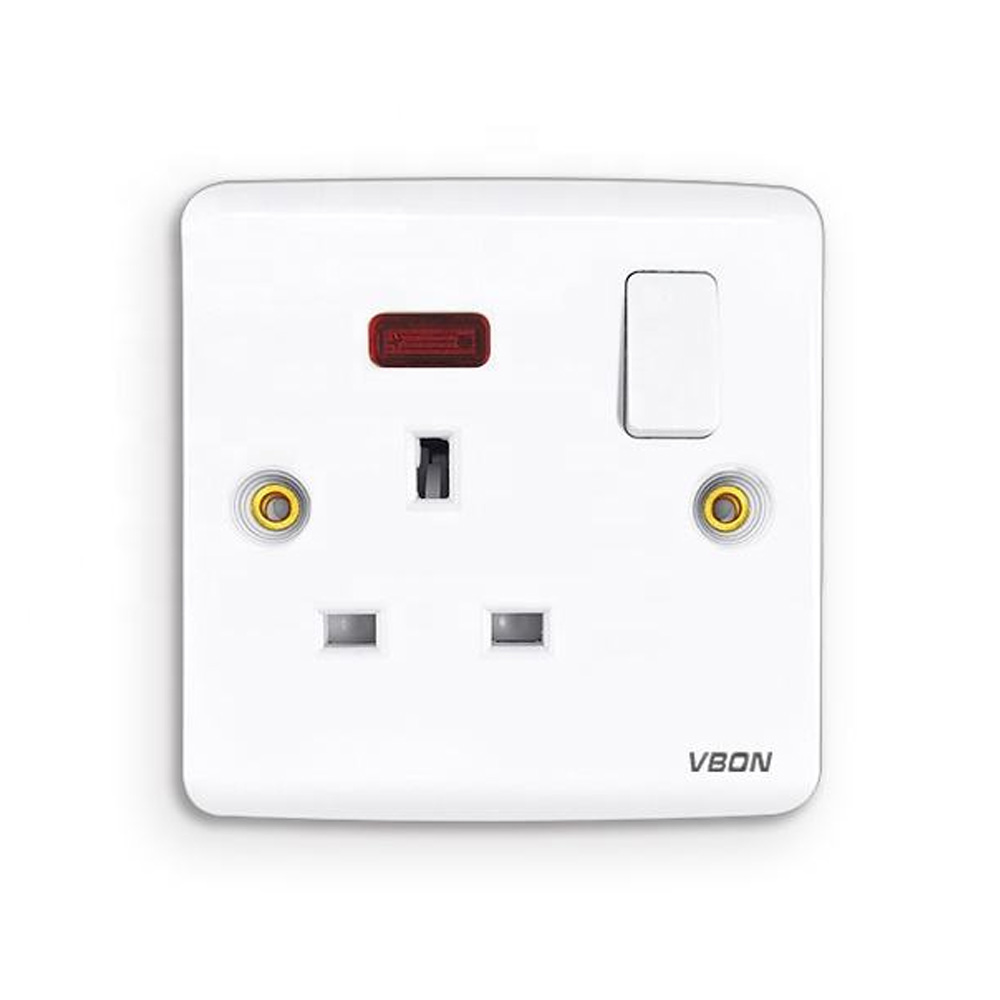
Global Wall Sockets Manufacturers Scale Up Smart Product Capacity
The smart socket market has been growing for several years, but for a long time the products dominating it were add-on adapters rather than native wall fittings. That is changing. Wall sockets manufacturers with serious production capability are increasingly building Wi-Fi connectivity, USB-C charging, energy monitoring, and voice-assistant compatibility directly into standard socket form factors — not as afterthoughts, but as designed-in features from the first CAD file.
Scaling that capacity is not straightforward. Smart sockets require PCB assembly, firmware validation, RF antenna integration, and EMC testing — capabilities that go well beyond what a conventional socket production line handles. Manufacturers building this out are either investing in in-house electronics assembly or establishing close working relationships with PCB module suppliers who can turn around consistent quality at production volumes. Either way, it requires real infrastructure investment — not just a new product listing.
- Integrated USB-C PD ports (up to 30W) are increasingly specified as standard rather than optional in smart socket designs
- Wi-Fi 6 and Zigbee dual-protocol support allows smart sockets to function across multiple home automation ecosystems without hardware changes
- Per-outlet energy monitoring chips provide real-time consumption data — a feature that has moved from premium into mid-range product lines in recent years
- OTA (over-the-air) firmware update capability extends product relevance after purchase and reduces the cost of post-sale technical support
- In-house EMC and RF certification testing at larger facilities shortens the approval timeline for new smart socket variants considerably
Wall Sockets Production Technology Moves Toward Miniaturization and Integration
Space is expensive — and in urban residential markets, particularly across Asia and Europe, wall cavity depth is limited and furniture arrangements are tight. The demand for sockets that do not protrude awkwardly, or that can be recessed neatly into kitchen units and AV cabinetry, has grown considerably. Wall sockets manufacturers are responding with a genuine engineering push toward slimmer profiles and integrated multi-function formats that pack more into less physical volume.
Getting a socket thinner without compromising safety clearances or contact performance requires careful re-engineering of the internal layout. Terminal blocks have to be repositioned. Cable entry angles change. Shutter mechanisms need to operate within tighter spatial budgets. Some manufacturers have moved to flat-stack terminal arrangements — where contact components sit in parallel layers rather than the conventional side-by-side configuration — to achieve the depth reductions the market wants.
| Format Type | Depth Behind Wall Face | Key Design Feature | Market Fit |
| Standard Socket | 35 – 45 mm | Conventional terminal layout, wide installation tolerance | General residential and commercial |
| Slim-Profile Socket | 22 – 28 mm | Flat-stack terminal block, repositioned cable entry | Urban apartments, shallow wall cavities |
| Recessed Flush Socket | 15 – 20 mm (flush) | Inset face plate, furniture-safe plug clearance design | Built-in furniture, kitchen units, AV cabinetry |
| Integrated Multi-Port Socket | 38 – 48 mm | Combined AC outlets + USB charging in single gang space | Home offices, hospitality, co-working spaces |
Depth figures are indicative and vary by manufacturer design and national wiring standards.
Integration is the other side of the trend. Combining AC outlets, USB charging, and sometimes a night-light or occupancy-sensing function into a single-gang wall plate is technically demanding — but it is what a meaningful portion of the market now expects as standard. Manufacturers who have invested in compact PCB layouts and efficient thermal management inside the socket body are better placed to deliver it reliably.
Wall Sockets Manufacturers Adopt Eco-Friendly Materials in Production
Sustainability requirements in electrical hardware are no longer just background noise for wall sockets manufacturers with export ambitions. EU REACH and RoHS regulations, carbon footprint disclosure requests from large commercial buyers, and growing retailer sustainability policies have all pushed material choices into sharper focus. The question manufacturers are working through is not whether to move toward greener materials — it is how to do it without degrading the flame resistance, dimensional stability, and surface quality that their products depend on.
Halogen-free flame-retardant compounds are now used in a substantial portion of higher-grade socket housings, meeting UL 94 V-0 requirements without bromine or chlorine-based additives. Post-consumer recycled content is being introduced into non-structural components where mechanical performance tolerances allow. Some manufacturers are also redesigning assemblies to reduce the number of different plastic types used — making end-of-life disassembly and material recovery more practical, even if it adds complexity to the design phase.
- Halogen-free flame-retardant (HFFR) thermoplastics achieve UL 94 V-0 ratings without the regulated additives increasingly restricted in European commercial projects
- Post-consumer recycled (PCR) content (typically 20–30%) introduced into face plates and back boxes where structural demands are lower
- Bio-based polymer blends remain at pilot stage with several manufacturers — not yet at production scale, but moving in that direction with each product cycle
- Reduced-VOC coating and printing for face plate finishes, driven by indoor air quality requirements in residential and healthcare installations
- Monomaterial design initiatives simplify end-of-life recycling by reducing the polymer variety within a single socket assembly
Cost is the honest complication here. Halogen-free compounds and recycled-content resins carry a price premium over conventional materials — and in a product category where margins are thin, absorbing that premium takes some doing. Wall sockets Manufacturers managing it are generally spreading the cost across higher-volume commercial runs and using the environmental credentials to compete more effectively in tender processes where sustainability scoring carries real weight.
