


 عربى
عربىElectrical Switch Manufacturers Improve Product Waterproofing Performance
Water and electricity have never been a comfortable pairing. Yet switches end up in bathrooms, outdoor enclosures, industrial wash-down environments, and marine installations constantly — places where a poorly sealed housing is not just a product failure, it is a safety event waiting to happen. That reality has pushed electrical switch manufacturers to treat waterproofing as a core engineering priority rather than a feature tacked on for premium SKUs.
The approach has shifted noticeably in recent years. Rather than applying a single gasket and hoping for the best, manufacturers are working with multi-layer sealing designs — silicone gaskets paired with precision-molded housing channels, pressure-equalization vents, and ultrasonic welding at key joint lines. The idea is to eliminate the weak points that water tends to find over time, especially when a switch goes through repeated temperature swings that cause materials to move slightly. Some factories have also pulled IP-rated tests earlier into the production process — running them at the prototype and tooling validation stage instead of waiting for a finished production sample.
- IP65 and IP67 ratings have shifted from premium options to baseline targets for outdoor and industrial product lines
- Silicone over-molding around cable entry points addresses one of the most common water ingress locations in field failures
- Salt spray testing evaluates long-term corrosion behavior — particularly relevant for coastal and marine installation environments
- Thermal cycling protocols stress-test seal integrity through temperature ranges from −20°C to +70°C repeatedly
- Ultrasonic welding in housing assembly replaces adhesive joints, producing bonds that hold up better under sustained moisture exposure
Electrical Switch Manufacturers Focus on Low-Energy Production Process Optimization
Energy costs are not something most switch buyers think about when they place an order. But inside the factories that make those switches, energy consumption has become a serious operational concern — and, increasingly, a procurement one too. A growing number of industrial buyers now ask suppliers about their production carbon footprint as part of vendor qualification. That pressure, combined with straightforward cost reduction incentives, has pushed electrical switch manufacturers to look hard at where energy is being consumed and where it does not need to be.
The injection molding department is usually the first place manufacturers look. Hydraulic molding machines are workhorses, but they draw power continuously regardless of whether the mold is actually doing anything. Servo-electric machines, by contrast, only pull significant energy during active movement phases — and the difference in consumption can be dramatic. Facilities that have made the switch report reductions of 30 to 50 percent in molding energy use alone. Add upgraded LED lighting, variable-frequency drives on conveyors and HVAC systems, and real-time energy dashboards that flag inefficiencies as they happen, and the cumulative savings across a mid-sized factory add up fast.
| Production Area | Traditional Equipment | Energy-Efficient Alternative | Typical Energy Saving |
| Injection Molding | Hydraulic machines | Servo-electric machines | 30 – 50% |
| Assembly Lines | Fixed-speed conveyors | Fixed-speed conveyors | 15 – 25% |
| Facility Lighting | Fluorescent / HID fixtures | LED smart lighting systems | 40 – 60% |
| Compressed Air Systems | Fixed-output compressors | Demand-controlled compressors | 20 – 35% |
| Cooling & HVAC | Single-speed systems | Inverter-driven chiller units | 25 – 40% |
Scheduling decisions matter too. Running energy-intensive processes during off-peak utility hours, reducing machine idle time between runs, and batching similar jobs to minimize setup cycles — none of these changes are glamorous, but they compound quietly into real savings. For manufacturers under pressure to keep prices competitive while also meeting sustainability benchmarks, this kind of operational discipline is becoming part of the standard playbook.
Electrical Switch Factories Use Precision Injection Molding to Improve Product Consistency
Anyone who has dealt with a batch of switch housings that do not quite click together correctly — or that seal unevenly because one wall came out a fraction of a millimeter too thin — understands why dimensional consistency matters so much in this category. It is not just aesthetics. A housing that is out of tolerance affects assembly, affects sealing, and can affect how reliably the switch performs over thousands of cycles. Precision injection molding is the manufacturing answer to that problem, and electrical switch factories have been investing in it seriously.
The defining feature of a precision molding setup is closed-loop process control. Sensors inside the mold cavity measure temperature, pressure, and fill behavior in real time during every single shot, and the machine makes automatic corrections before the next one. What this means in practice is that the thousandth part off a tool behaves much the same as the tenth — variation that used to creep in over a production run gets caught and corrected before it becomes a defect pattern. Scrap rates drop. Rework drops. Assembly yields improve.
- Cavity pressure sensors monitor fill dynamics shot-by-shot, enabling automatic process correction before defects develop
- Hot-runner systems eliminate cold runners entirely, cutting material waste and stabilizing gate quality across cavities
- Scientific molding process development creates stable, documented process windows that hold up across shifts and operators — not just during initial setup
- Automated vision inspection immediately downstream of the press catches dimensional and surface issues before parts reach assembly
- Controlled resin drying maintains consistent moisture content in material, preventing the sink marks and brittleness that variable drying causes
The downstream benefits are real. When housing tolerances are tight, actuator travel distances are predictable, terminal contact alignment is reliable, and snap-fit assemblies go together without force or adjustment. That kind of consistency is hard to achieve without precision molding infrastructure — and increasingly, buyers who have experienced it are reluctant to go back to suppliers who cannot offer it.
Electrical Switch Manufacturers Raise Fire Safety and Testing Standards
Fire safety in electrical switches is one of those topics that tends to receive serious attention only after something goes wrong. That is changing. As switch products find their way into more demanding environments — high-density apartment buildings, data halls, hospitals, transportation infrastructure — the fire-related requirements attached to those applications have become more explicit and more closely scrutinized. Electrical switch manufacturers are responding by strengthening both the materials they specify and the testing they run internally.
Material selection is where a lot of this work begins. Halogen-free, flame-retardant thermoplastics that achieve UL 94 V-0 ratings have been gaining ground for several years, partly because regulations in Europe and certain Asian markets have pushed bromine and chlorine-based flame retardants out of favor, and partly because specifiers in sensitive environments have started asking about material composition directly. Getting to V-0 without halogens requires careful material engineering — it is not simply a matter of swapping one resin for another.
| Test Type | Purpose | Common Standard Referenced | Test Condition |
| Glow-Wire Test | Evaluate ignition resistance of housing materials | IEC 60695-2-11 | 650°C – 960°C, 30 seconds |
| Needle-Flame Test | Needle-Flame Test | IEC 60695-11-5 | Applied flame, 10 seconds |
| Applied flame, 10 seconds | Assess resistance to electrical tracking on insulation | IEC 60112 | Voltage steps in electrolyte solution |
| Arc Fault Endurance | Verify housing integrity under arc fault conditions | UL 489 / IEC 60947 | Repeated arc cycling at rated current |
| Flammability Classification | Rate material burning behavior | UL 94 | V-0 / V-1 / V-2 classification |
What is also shifting is the cadence of testing. Manufacturers that previously relied heavily on periodic third-party certification renewals are building more of this testing capacity in-house — running glow-wire evaluations, needle-flame tests, and CTI measurements as routine production quality checks rather than one-off certification events. It costs more to set up that infrastructure. But it means problems get caught earlier, and it gives manufacturers a clearer, more current picture of how their materials are actually performing.
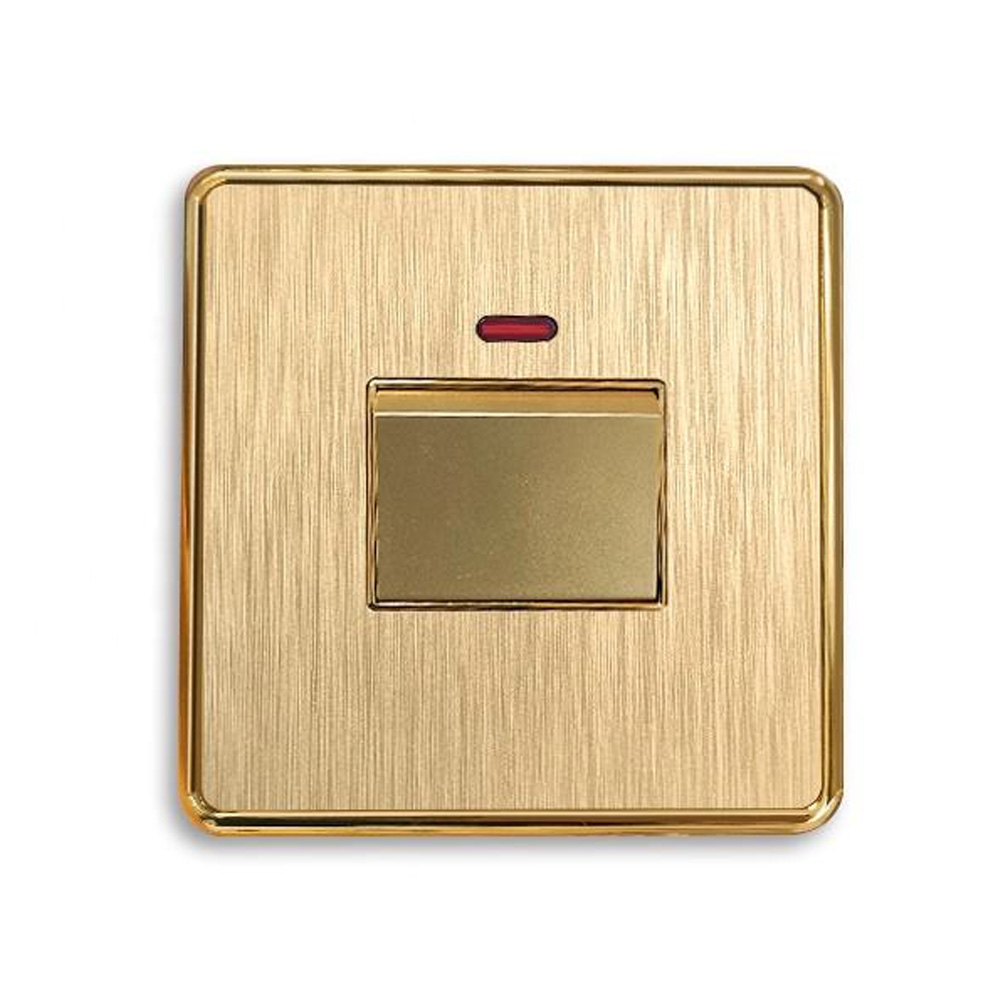
Electrical Switch Manufacturers Expand Custom Product Development Capabilities
The catalog model still works for a lot of buyers. But a growing segment of the market — OEMs building specialized equipment, smart home platform developers, commercial contractors with specific aesthetic briefs — has moved beyond what standard product lines can offer. They need switches built to their dimensions, their interface configurations, or their brand identity. And increasingly, they expect electrical switch manufacturers to handle that without a 12-month lead time and a six-figure minimum order.
That expectation is pushing manufacturers to build out their customization infrastructure more deliberately. Some of this is tooling strategy — modular mold systems where cavity inserts can be swapped for different housing variants without commissioning an entirely new tool from scratch. Some of it is upstream, in design capability. Manufacturers that have expanded their in-house engineering teams can engage with a client's requirements earlier and more substantively, catching design-for-manufacturability issues before they become expensive tooling revisions.
- Modular tooling inserts let manufacturers produce housing variants without building new molds from scratch each time — a significant cost and time reduction for clients
- 3D-printed prototype housings compress the design validation cycle from several weeks to a matter of days, making early-stage iteration far more practical
- In-house PCB and electronics design opens the door to smart switch and IoT-integrated products, not just mechanical customization
- Reduced minimum order quantities for custom runs make tailored development accessible to smaller OEM clients who cannot absorb large upfront inventory commitments
- Co-development programs embed manufacturer engineers into the client's design process early — reducing revision cycles and accelerating time-to-market for both sides
There is a commercial logic to this beyond simply satisfying client requests. Manufacturers that can handle custom development become harder to replace. The relationship deepens. The client's product gets tied to that factory's tooling and institutional knowledge in ways that make switching suppliers genuinely disruptive. For electrical switch manufacturers competing in a market where price pressure is real and product differentiation is difficult, building this kind of stickiness has real strategic value.
