


 عربى
عربىBlack Switch Suppliers in Asia-Pacific Dominate Global Market
The global market for electrical switches, including wall switches, sockets, and control switches, continues to demonstrate strong growth. According to recent market analyses, the region of Asia-Pacific accounts for a leading share of global demand in switch and light-control markets.
This dominance stems from a combination of factors: robust electronics and construction industries, rapid urbanization, increasing residential and commercial development, and growing adoption of smart home and infrastructure solutions across emerging economies. Older infrastructure continues to undergo upgrades, and new buildings enter the market, driving strong demand for “black switch” components — sleek, modern wall switches in darker finishes favored in contemporary design.
Key global reports forecast that the overall electric-switch market will grow significantly over the next decade, driven by both traditional installations and the rising adoption of smart/light-control switches. Consequently, Asia-Pacific manufacturers and suppliers of black switches are affirming their dominance, supplying both domestic demand and exports worldwide.
Growing interest in interior design trends also strengthens this momentum, since architects and renovation contractors frequently select black panels to create cleaner visual contrast in modern spaces. Hotels, retail chains, and corporate offices increasingly request uniform product lines that match broader design themes, giving regional suppliers an opportunity to expand into project-based solutions. Many manufacturers further enhance competitiveness by investing in automated assembly, improved quality control systems, and flexible OEM/ODM services tailored to global buyers.
Global Changes Shape Black Switch Cost and Supply
Despite growth, the global supply chain for switch components is undergoing stress. Rising demand places pressure on raw materials (like plastics, metals, and copper), while manufacturing and logistics face increased costs due to evolving regulatory standards, energy costs, and environmental compliance. Many switch producers now need to comply with stricter regulations related to safety, energy efficiency, and environmental impact.
These pressures can translate into higher production costs and, in some cases, longer lead times or constrained supply — especially for high-quality, durable black switches with metal contacts or enhanced finishes. At the same time, global inflation, material scarcity, and increasing shipping costs can affect the final retail price of switches. As a result, some buyers may delay building upgrades or opt for simpler switch designs.
Yet, for many Asia-Pacific suppliers — who benefit from mature manufacturing infrastructure and economies of scale — the impact can be mitigated, allowing them to continue supplying competitively priced black switches to global markets.
Industry analysts note that ongoing investment in automation, improved production planning, and long-term relationships with raw-material vendors helps stabilize output despite supply challenges. Several manufacturers also explore alternative materials or redesign internal components to maintain reliability while controlling costs. Importers and distributors increasingly rely on suppliers that demonstrate consistent delivery performance, giving established Asia-Pacific companies an advantage in markets that prioritize stable supply and predictable product timelines.
Smart Lighting, Switch, Socket Bundles Gain Market Momentum
One of the most significant trends reshaping the light-switch market is the integration of switches, sockets, and lighting into unified smart-home solutions. The global smart-lighting market was valued at USD 15.05 billion in 2022 and is projected to grow to USD 72.35 billion by 2030, with the Asia-Pacific region expected to achieve the fastest growth rate.
As a result, switches are no longer just manual control points — increasingly, they form part of an interconnected ecosystem: smart lighting fixtures, IoT devices, energy monitoring, and remote-control or automated functions. For builders and integrators, offering a “switch + socket + smart lighting” bundle becomes attractive: improved convenience, simplified installation, and compatibility with home automation platforms.
This trend pushes traditional black-switch suppliers to expand their offerings beyond mechanical switches, to smart switch panels, dimmers, and integrated wall modules that support IoT connectivity. It also raises expectations for switch design — sleek finishes, compact form factors, and seamless integration with lighting and other smart-home devices.
Growing interest in energy-saving solutions further strengthens demand for bundled systems, since users prefer unified platforms that enable simple scheduling, centralized control, and coordinated lighting behavior across different rooms. Builders and project contractors now prioritize product lines that offer consistent aesthetics, stable performance, and easy system expansion, creating new momentum for suppliers able to deliver complete, well-designed bundles.
Industry Move Toward Sustainable, Recyclable Materials in Switch Production
Environmental considerations are gaining traction across the global electronics components industry, including for light switches and sockets. Increasingly, manufacturers are exploring sustainable materials, recyclable plastics, halogen-free components, and closed-loop production models to reduce waste, cut emissions, and limit the environmental footprint of their products.
This shift is especially relevant in Asia-Pacific, where e-waste generation remains a major concern. Regulators and companies alike are promoting circular economy practices, recycling programs, and eco-friendly materials across electronics supply chains.
For black-switch suppliers, this means increasing demand for recycled or recyclable plastics, metal contacts sourced responsibly, and designs that support disassembly or recycling at end-of-life. Forward-looking manufacturers that adopt these sustainable practices may gain a competitive edge — both in fulfilling regulatory requirements and appealing to environmentally conscious buyers and markets.
Lipoer Electrics — Product Recommendation for Black Switch Solutions
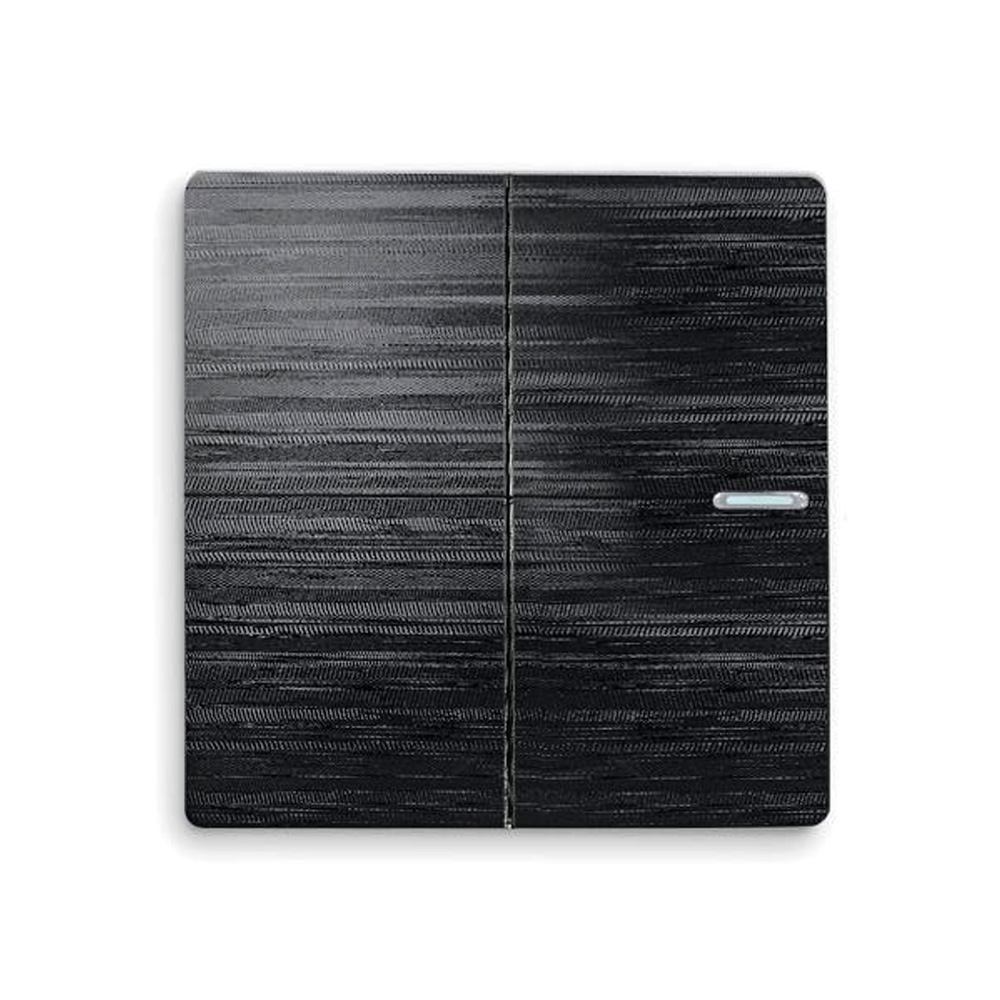
A example of an Asia-Pacific supplier aligned with current market and design trends is Wenzhou Lipoer Electrics Co., Ltd.. Among its offerings, the VBQN A86 Series (PC Black Brushed Panel Design) stands out as a high-quality black switch solution.
Why the A86 Series is a recommended option:
- Material & Durability: The A86 Series uses polycarbonate (PC) for both front and back panels, combined with phosphor copper and silver-alloy touchpoints — ensuring long-term durability and reliable electrical performance.
- Sophisticated Aesthetics: Its black brushed-panel finish offers an elegant, modern look, making it suitable for contemporary residential interiors, commercial offices, and even high-traffic public spaces.
- Practical and Versatile: With a standard 86 mm × 86 mm size and a rated 250V / 10A, the switch fits common wall box standards (e.g., UK standard) and can be deployed across different regions and markets.
- Manufacturing & Export Capability: Wenzhou Lipoer has a robust manufacturing setup — injection molding, quality control, assembly, and automated testing — with monthly output reaching up to 1,000,000 pieces, and export experience across Southeast Asia, Middle East, Europe, Latin America, Africa, and beyond.
Clients or developers seeking modern, durable, and export-ready black switches for smart-home upgrades, new builds, or commercial projects may find the A86 Series from Wenzhou Lipoer to be a solid, market-aware choice.
Conclusion
The black switch segment remains a dynamic and growing niche within the broader light switch and electrical socket market. Black switch supplier networks in Asia-Pacific continue to lead in global share, supported by strong manufacturing capacity and competitive export capabilities. Supply-chain and regulatory shifts are reshaping production cost and component availability, while the rise of smart home integration accelerates demand for bundled “switch + socket + lighting” solutions. Sustainability is also emerging as a key design driver, influencing material selection and product engineering standards. Manufacturers like Wenzhou Lipoer — offering well-designed, robust, and export-ready black switch panels such as the VBQN A86 Series — are well-positioned to meet these evolving needs.
